Who Gets Hired as a Consultant in 2026—and Why
Who Gets Hired as a Consultant in 2026—and Why Clients Choose Them
5 min read ·
Aug 13, 2026

The consulting industry is sending two completely contradictory signals.
On one hand, consulting firms are cutting jobs, profit margins are shrinking, and clients are becoming far more cautious about spending on external advisors. AI is making some consulting work faster, cheaper, and increasingly difficult to differentiate.
On the other hand, many independent consultants are fully booked, raising their fees, and winning more strategic work than ever before.
Both things are true.
So what separates the consultants clients still hire from those they quietly stop calling?
The Consulting Slowdown Is Real
If building a consulting practice feels harder than it did a few years ago, that's because it is.
The consulting industry is experiencing its biggest correction in decades. Large firms are cutting thousands of jobs. Profit margins are shrinking under pricing pressure and digital transformation. AI is replacing work that only recently justified premium consulting fees. Companies are delaying projects, reducing discretionary spending, and scrutinizing every external engagement.
The data leaves little room for debate. Since 2015, around 20% of consulting firms have gone out of business, while another 30% report declining revenue (Source: IBISWorld, 2024). McKinsey, Bain, BCG, and Accenture have all announced significant layoffs as demand shifts and automation reshapes the economics of consulting. Meanwhile, 70% of consulting firms report declining profit margins (Source: Deloitte, 2024), and the traditional consulting model is under pressure from every direction.
When Even Harvard MBAs Struggle to Find Work
There was a time when a consultant could justify premium fees with an impressive biography. A top MBA. A PhD. A stack of certifications. A few recognizable employers. Those signals reduced perceived risk, so clients were willing to pay for them. That logic no longer holds.
Every month, we read headlines like "Even Harvard M.B.A.s Are Struggling to Land Jobs." Yet many consultants continue treating credentials as their primary competitive advantage. The market has already moved on.
Today, only 7% of clients consider academic degrees when hiring a consultant. The other 93% prioritize relevant expertise and proven results (Source: Consulting Success, 2024).
Expertise Became the Entry Ticket
The uncomfortable truth is that expertise alone isn't either.
Clients still expect you to know your field. They assume you understand their industry, bring relevant experience, and have proven methods. That's no longer a competitive advantage—it's the minimum requirement to be considered.
The First Thing Clients Buy
Behind every business challenge sits a human one. Leaders aren't running out of information—they're running out of certainty. Every decision carries financial consequences, competing priorities, and pressure from stakeholders, often without enough time or complete information.
The consultants who continue to win work understand this. Before they deliver strategy, recommendations, or transformation plans, they reduce the emotional and cognitive burden their clients carry. They create clarity where there is confusion, simplify difficult choices, and replace paralysis with forward movement. In today's consulting market, relief isn't a by-product of good consulting. It's one of the reasons clients hire consultants in the first place.
Winning the Project Isn't the Hard Part
Winning the engagement doesn't make the hard part over. It marks the beginning of it.
Once inside the organization, consultants step into a reality where priorities compete, stakeholders disagree, market conditions shift, and yesterday's assumptions are constantly challenged. The problem that brought the client to you is rarely the only problem that needs solving—and often isn't the most important one. A strategy developed today may need to be revisited in six months. A successful business model can become vulnerable after a single technological breakthrough, regulatory change, or shift in customer behavior.
The value of consulting is no longer measured by the quality of a single recommendation, but by the organization's ability to keep adapting after that recommendation has been implemented.
Every Client Needs a Different Answer
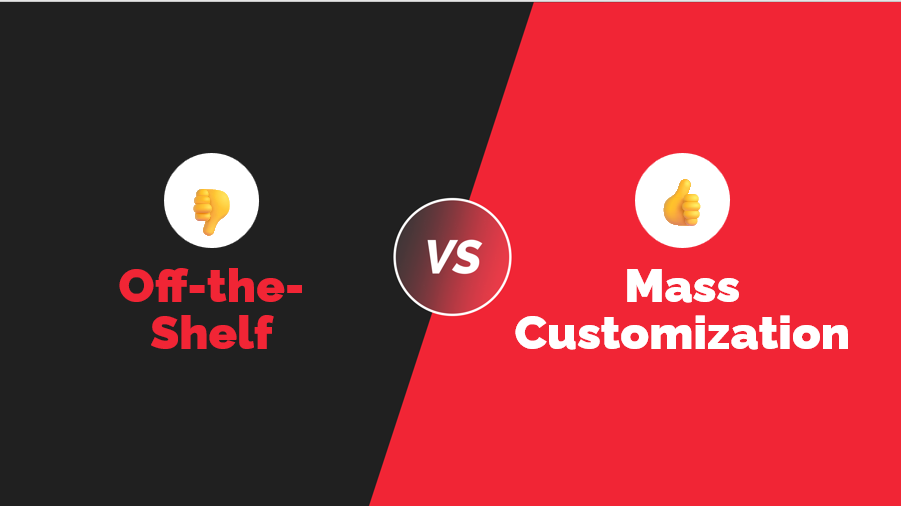
As business challenges become more complex and less predictable, standardized advice is losing value. Generic frameworks, best practices, and off-the-shelf recommendations are increasingly easy to generate—often by AI.
What clients struggle to find is something different: advice that reflects their business, their constraints, and their reality.
That requires a different kind of consulting. Instead of delivering pre-built answers, consultants increasingly facilitate better thinking. They ask better questions, surface hidden assumptions, navigate competing priorities, and help leaders arrive at decisions they can actually execute. The value is no longer in applying the same framework to every client. It's in making every engagement unique.
Reinvention Is the New Baseline
According to PwC's latest Global CEO Survey, CEOs already spend 47% of their time on reinvention and expect that figure to rise to 57% within the next year.
That means clients increasingly need advisors who can help them rethink business models, challenge assumptions, make decisions under uncertainty, and build organizations that can adapt repeatedly—not just once.
That's who gets hired in 2026.
.svg)

Join 15,000+ professionals reading Reinvention Weekly