The End of the Hourly Consulting Model
The End of the Hourly Consulting Model: Why Billing by the Hour Is Breaking Down
8 min read ·
Aug 6, 2026
Hourly billing is still familiar—but it is no longer the center of gravity in consulting.
Preliminary results of our 2026 Consulting Fees Survey show that only 30% of consultants and coaches said they primarily charge by the hour, down from 36% two years ago. A much larger share—55%—now charge per project or assignment, while retainers and fractional roles are also gaining ground.
Why Hourly Consulting Worked for So Long
For most of consulting history, charging by the hour made perfect sense. Expertise was scarce, research was slow, and clients paid for the time required to analyze problems and develop recommendations. In a more stable business environment, time was a reasonable proxy for value.
The model also worked because solutions stayed relevant longer. Consultants could spend weeks building a recommendation without worrying that the market would change before implementation began. More hours generally meant more work—and more work generally meant more value.
Today, that relationship is breaking down. A consultant using traditional methods may spend thirty hours solving a problem. Another may arrive at a better answer in six hours using AI, better tools, and stronger pattern recognition. Under an hourly model, the more effective consultant earns less. Time is becoming a weaker measure of the value consultants actually create.
The Problem With Hourly Billing Was Never the Price
For decades, consulting operated on a simple arrangement: the consultant got paid for advice, while the client carried most of the risk. Every proposal contained some version of the same disclaimer—this is advice only, results not guaranteed. If the recommendation worked, everyone was happy. If it failed, the consultant still collected the fee.
Twelve years ago, we stopped being comfortable with that model. Instead of charging purely for time and recommendations, we began moving toward success fees.
The logic was simple: if we genuinely believed our work would create value, we should be willing to share some of the risk. If the client wins, we win. If the client loses, we lose too.
At the time, that approach felt unusual. Today,firms like McKinsey are increasingly experimenting with outcome-based engagements and success-fee arrangements. Not because they suddenly embraced shared risk, but because the economics of expertise are changing. As AI makes hours less valuable and outcomes more visible, the market is moving away from paying for effort and toward paying for results.
AI Is Compressing the Work Consultants Used to Bill For
AI is not replacing consultants. But it is rapidly reducing the time required for many of the tasks consultants historically billed for—research, market analysis, competitive scans, first-draft strategies, workshop summaries, content creation, and data interpretation. These activities still matter, they simply no longer command the same premium.
This does not mean consultants have become less valuable. It means the source of value has shifted. The premium is moving away from information production and toward judgment, context, facilitation, and decision-making. In that sense, AI is exposing a distinction that was always there: the difference between selling expertise and selling labor.
AI didn't create this shift—it accelerated it. It's one of several forces reshaping the consulting industry. For a broader look at where the profession is heading, see our analysis of future trends in consulting.
The consultants who thrive in the next decade will be those whose value increases when AI enters the process—not those whose value disappears.
The Deeper Problem: Expertise Expires Faster
AI is only part of the story. The deeper force reshaping consulting is volatility.
For decades, consultants could build careers around proven frameworks, established methodologies, and accumulated expertise. The assumption was simple: if something worked yesterday, it would probably work tomorrow. Today, that shelf life is shrinking. Solutions expire faster, markets shift faster, and many client challenges emerge before a proven answer exists.
As a result, clients are increasingly buying something different. They are not just looking for expertise or recommendations. They need help navigating uncertainty, interpreting signals, testing options, and adapting as conditions change. Once consulting becomes less about delivering answers and more about helping clients find their way forward, time becomes a weak pricing anchor. Clients are not buying hours—they are buying movement through uncertainty.
The Rise of Process Consulting
This shift is changing not only how consultants charge, but also what clients hire them to do.
Traditionally, consultants were hired to provide answers. They brought frameworks, recommendations, and best practices. The value was in the expertise itself.
That model still has its place. But as solutions expire faster and uncertainty becomes a permanent condition, clients increasingly need help interpreting signals, evaluating options, and adapting as circumstances change.
This is the essence of process consulting.
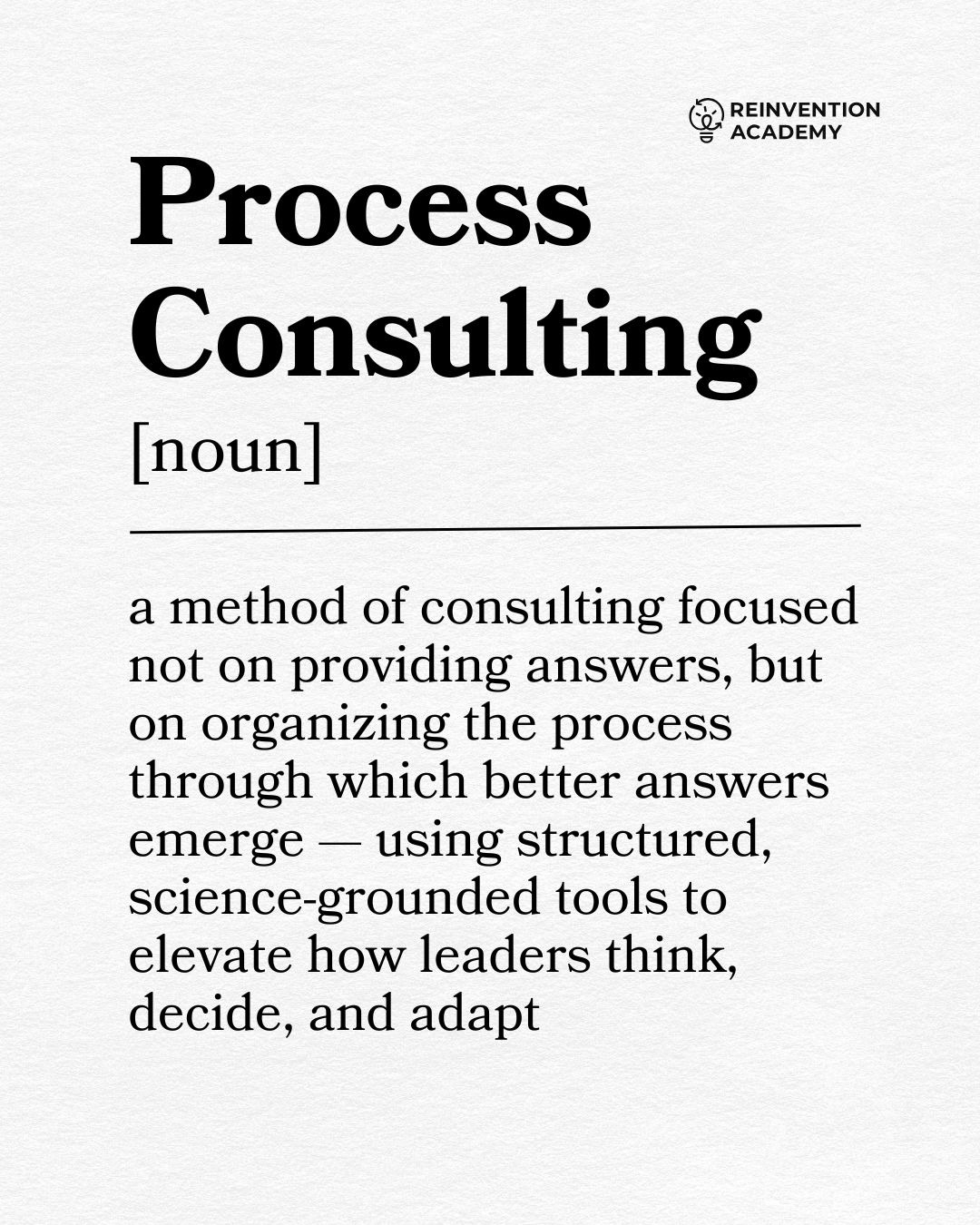
Instead of saying, "I have the answer," the consultant helps the client find, test, and refine the answer. The value shifts from recommendations to decision-making—and in a volatile environment, that capability often becomes more valuable than the answer itself.
What Is Replacing Hourly Consulting Fees?
There is no single replacement.
The market is moving toward a portfolio of models that better reflect the type of value being created.
Preliminary data from Reinvention Academy’s 2026 Consulting Fees Survey points in this direction: project-based pricing is already ahead of hourly billing as the primary pricing approach among surveyed consultants and coaches, while retainers and fractional roles are gaining ground.
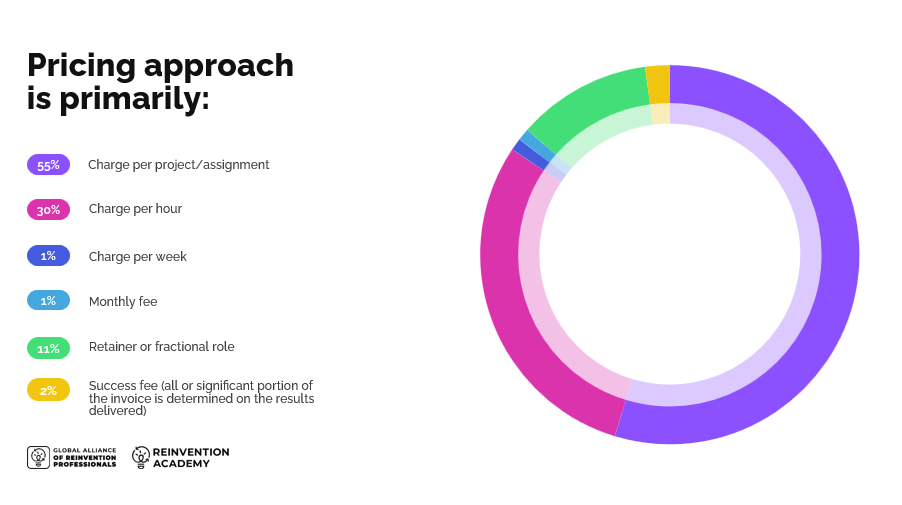
Source: 2026 Global Consulting Fees Survey by Reinvention Academy
That pattern makes sense.
As consulting value shifts from time spent to outcomes created, pricing follows.
Project-Based Pricing: Selling a Defined Outcome
Project-based pricing is often the first step away from hourly billing. Instead of paying for time, clients pay for a defined outcome—a strategy sprint, reinvention roadmap, organizational diagnostic, or transformation project. The appeal is simple: clients gain cost certainty, while consultants can price based on value rather than effort. In an AI-enabled world, where better tools make work faster, project pricing rewards efficiency instead of penalizing it.
Retainers: Selling Ongoing Access
Retainers are becoming more common because disruption is no longer an occasional event. Rather than hiring a consultant for a one-time recommendation, organizations increasingly need ongoing support interpreting signals, adjusting decisions, and navigating change. A well-designed retainer turns the consultant into a strategic partner, providing continuity for the client and more predictable revenue for the advisor.
Fractional Roles: Selling Embedded Capability
Fractional roles reflect a growing demand for senior expertise without the cost of a full-time executive. Companies gain access to experienced leadership, while consultants become more deeply embedded in decision-making and execution. Unlike traditional consulting, success is measured less by deliverables and more by contribution, judgment, and the ability to help the organization move forward.
The Volatility Premium
For decades, consultants earned a premium because they possessed knowledge that clients did not. Expertise was scarce, information was difficult to access, and proven answers could remain relevant for years. Today, knowledge is abundant, AI can generate competent first drafts in seconds, and many business challenges emerge before a proven answer exists.
As a result, the premium is moving. Clients are paying less for access to information and more for help navigating uncertainty. They need partners who can recognize patterns, facilitate difficult decisions, challenge outdated assumptions, and help organizations adapt before change becomes a crisis.

This is why reinvention is becoming a consulting capability rather than a niche specialty. Reinvention is not a one-time transformation project. It is the structured ability to anticipate, design, and implement change continuously. Consultants who help clients build that capability will be harder to replace—and increasingly difficult to commoditize.
What Consultants Should Do Now
None of this means hourly billing will disappear. For clearly scoped technical work, specialist expertise, or early-stage exploratory projects, it may remain a useful pricing model.
The larger question is whether time is still the best reflection of the value you create.
If clients hire you to provide information, hourly billing may continue to make sense. But if they hire you to create alignment, accelerate decisions, build reinvention capability, navigate uncertainty, or help them move through complex change, the value of your work extends far beyond the hours invested.
The consultants most likely to thrive in the next decade will not necessarily be those with the deepest expertise. They will be those who understand what clients are actually buying—and price accordingly.
Ask a sharper question:
What is the client actually buying from me?
Are they buying time?
Or are they buying a decision, a shift, a process, a capability, a roadmap, a new operating rhythm, or a way through uncertainty?
Once you answer that honestly, pricing becomes clearer.
.svg)

Join 15,000+ professionals reading Reinvention Weekly