What Skills Will Consultants Need in the Next Decade?
What Skills Will Consultants Need in the Next Decade? Why Expertise Is No Longer Enough
5 min read ·
Aug 11, 2026
The consulting profession is entering its biggest transformation in decades.
For decades, organizations hired consultants for their expertise. They needed knowledge, frameworks, best practices, and answers they couldn't produce internally. Today, expertise remains essential—but it is no longer enough. As knowledge becomes more accessible and business environments become more volatile, clients increasingly value consultants who can create clarity, improve decision making, and help organizations adapt continuously. The source of consulting value is shifting. And with it, the skills required to build a successful consulting practice.
Here are the 5 skills that will increasingly determine who gets hired, who commands premium fees, and whose consulting practice continues to grow over the next decade.
The Old Consulting Skill Stack
The traditional consulting model was built on expertise. Clients hired consultants to diagnose problems, benchmark competitors, recommend proven solutions, and turn those recommendations into action plans. Deep subject knowledge, research, frameworks, and analysis defined the profession for decades.
Those skills haven't disappeared. They've become expected.
- Subject matter expertise
- Proven frameworks
- Research and analysis
- Benchmarking
- Recommendations
- Presentation and communication
The New Consulting Skill Stack
Expertise is no longer what sets consultants apart.
What differentiates the strongest consulting practices today is the ability to create clarity, improve decision-making, strengthen adaptability, and leave clients more capable than they were before the engagement began.
These 5 skills are becoming the new source of competitive advantage.
1. Sensemaking: Turning Information Into Strategic Clarity
One of the consultant's traditional roles was to bring information into the room. Research, benchmarks, best practices, competitive intelligence, and market analysis formed the foundation of many consulting engagements.
That is no longer where the greatest value lies.
Your clients already have access to AI assistants, industry reports, customer analytics, market intelligence, and more dashboards than they know what to do with. The problem isn't access to data. It's making sense of it.
The consultants who stand out are the ones who help leaders separate signals from noise, connect seemingly unrelated developments, and understand not only what is changing, but why it matters and what decisions should follow.
This is the essence of sensemaking: translating complexity into strategic clarity.
2. Process Facilitation: Moving Beyond Answers
One of the biggest shifts in consulting is the move from content expertise to process expertise.
Content consultants deliver answers. Process consultants improve the way organizations reach them.
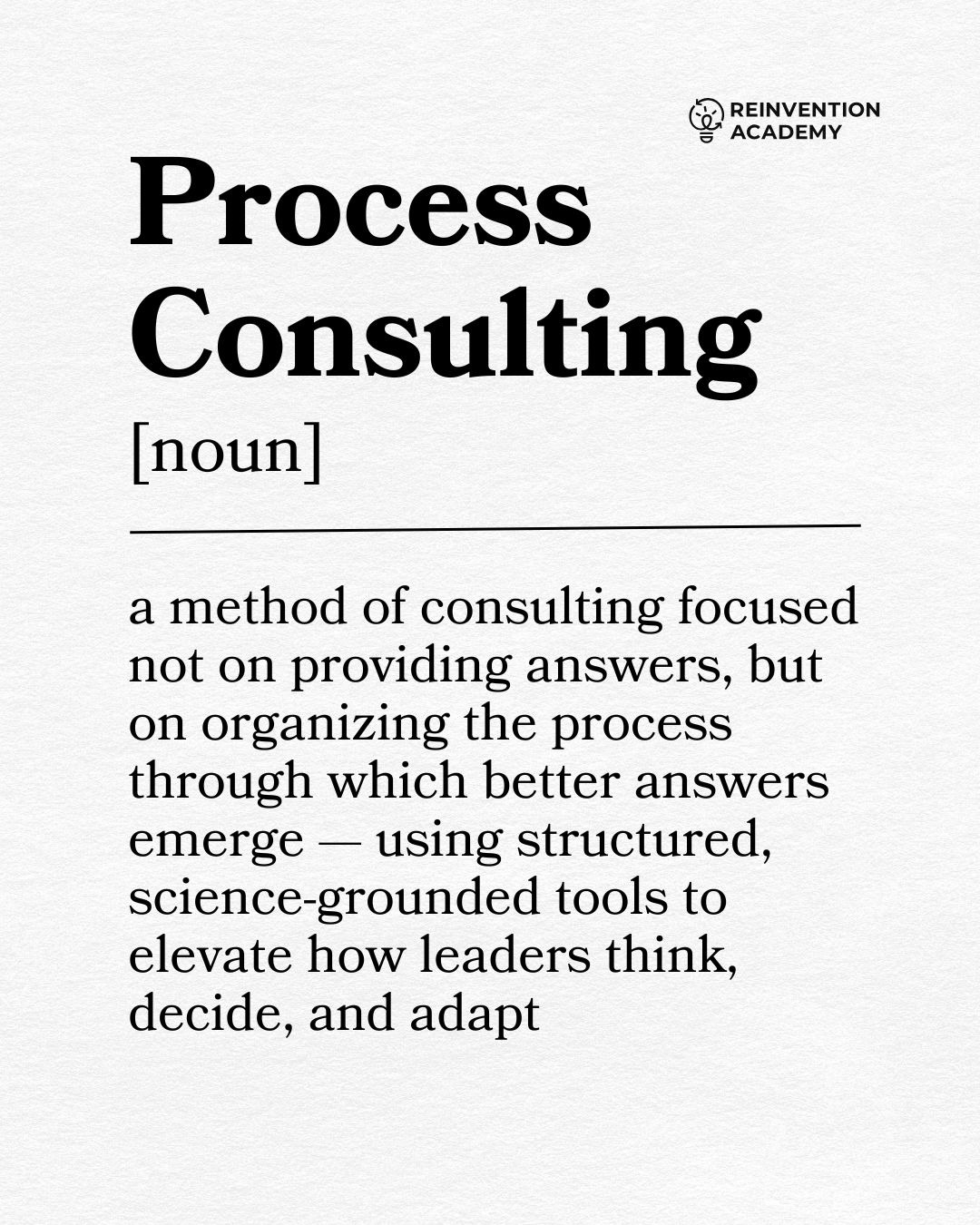
That requires a different skill set: facilitating difficult conversations, surfacing hidden assumptions, helping leaders evaluate trade-offs, and guiding groups toward better decisions—especially when there is no obvious "right" answer.
Unlike answers, which lose value as the business changes, better decision-making becomes a lasting organizational capability. Clients don't just remember the solution you delivered—they remember that they make better decisions because of how you worked with them. And that's what brings them back when the next challenge inevitably arrives.
3. Reinvention Capability: Helping Organizations Stay Ahead of Change
Change management assumes that change has a beginning and an end.
Business doesn't work that way anymore.
Markets shift before strategies are fully implemented. New technologies reshape customer expectations. Competitive advantages disappear faster than organizations can rebuild them.
This is where I believe consultants need to expand their toolkit.
The most valuable consultants won't be the ones who help clients execute the next transformation. They'll be the ones who help clients build the capability to adapt continuously—to spot change earlier, respond faster, and renew before performance starts to decline.
This is what I call reinvention:
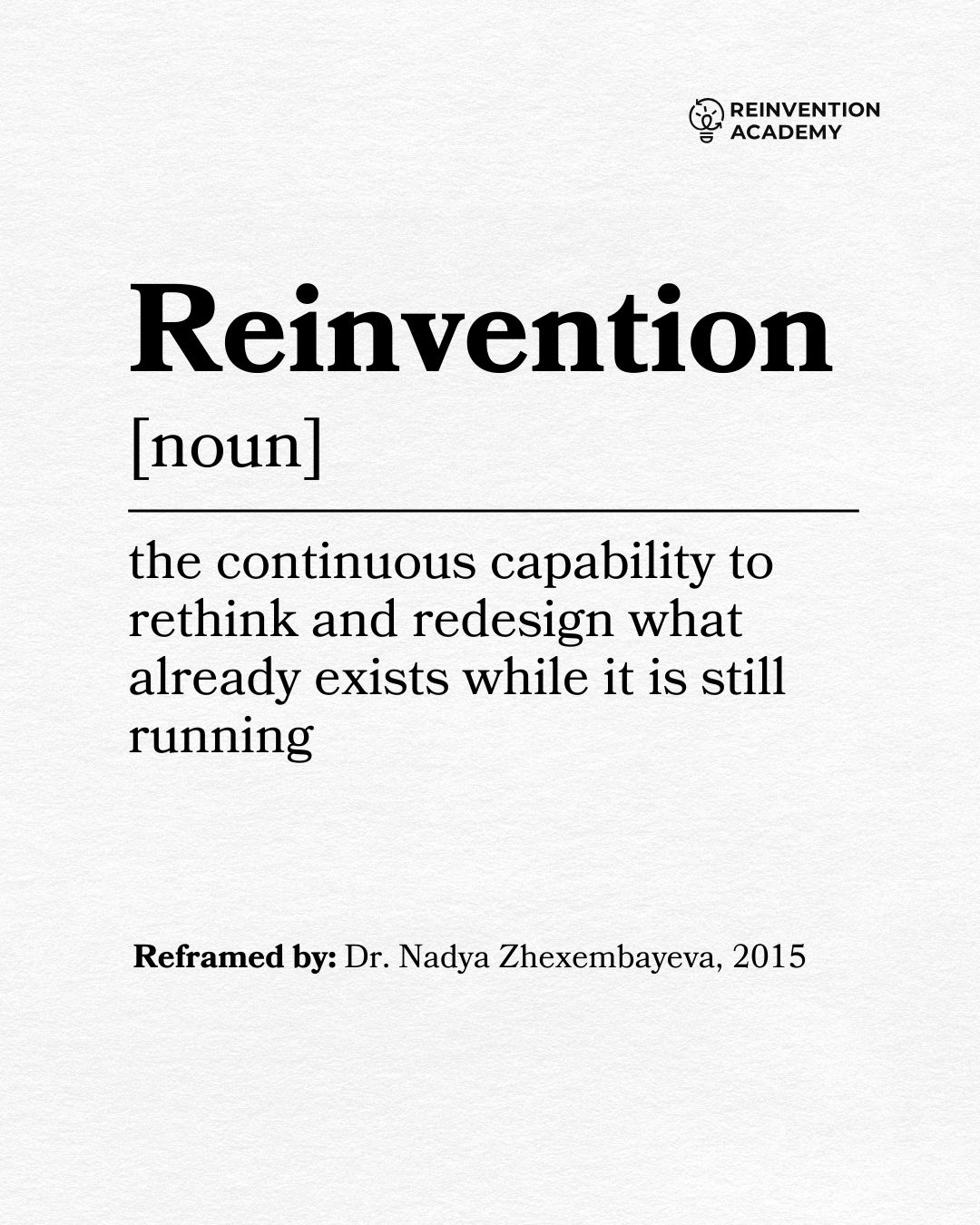
In a post-stability economy, that capability becomes far more valuable than successfully delivering any single change initiative.
4. Systems Thinking: Seeing the Connections Others Miss
Business problems rarely exist in isolation.
A pricing decision affects customer behavior. A technology investment changes talent needs. A cost-cutting initiative influences culture. Every decision creates ripple effects across the organization.
One of the most valuable consulting skills is the ability to see those connections before they become costly surprises.
Systems thinking means looking beyond the immediate problem to understand the relationships, trade-offs, and unintended consequences that shape the whole system. It helps leaders avoid solving one challenge while creating three new ones.
As organizations become more complex, clients need fewer isolated recommendations and more consultants who can see the bigger picture.
5. Adaptive Leadership: Balancing Change and Stability
One of the biggest misconceptions about leadership is that its job is to create stability.
In today's business environment, effective leaders must do something much harder: create enough change to keep the organization evolving, while maintaining enough stability for people to execute.
I call this the balance between healthy chaos and healthy order. Leadership creates movement by challenging assumptions, exploring new opportunities, and questioning the status quo. Management turns that movement into execution through priorities, processes, and discipline.
The same is true for consultants.
The most valuable consultants won't simply help clients generate new ideas or execute existing plans. They'll know when an organization needs more disruption—and when it needs more structure. Helping clients navigate that balance may become one of the profession's most valuable leadership skills.
The Consultant of 2030: Beyond Expertise
Expertise remains the foundation of every successful consulting practice. But foundations alone don't determine who clients choose to work with.
The consultants who stand out over the next decade will be those who help organizations build capabilities they cannot buy from an AI assistant or download from a report. They will leave behind better decisions, stronger leadership teams, more adaptive organizations, and a greater capacity to navigate whatever comes next.
That is the future of consulting.
.svg)

Join 15,000+ professionals reading Reinvention Weekly